|
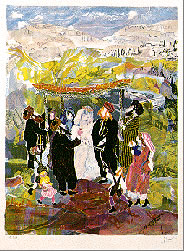 In traditional Jewish literature marriage is actually called kiddushin, which translates as "sanctification" or "dedication." "Sanctification," indicates that what is happening is not just a social arrangement or contractual agreement, but a spiritual bonding and the fulfillment of a mitzvah, a Divine precept. "Dedication," indicates that the couples now have an exclusive relationship that involves total dedication of the bride and groom to each other, to the extent of them becoming, as the Kabbalists state, "one soul in two bodies." In traditional Jewish literature marriage is actually called kiddushin, which translates as "sanctification" or "dedication." "Sanctification," indicates that what is happening is not just a social arrangement or contractual agreement, but a spiritual bonding and the fulfillment of a mitzvah, a Divine precept. "Dedication," indicates that the couples now have an exclusive relationship that involves total dedication of the bride and groom to each other, to the extent of them becoming, as the Kabbalists state, "one soul in two bodies."
CHUPAH
The wedding ceremony takes place under the chupah (canopy), a symbol of the home to be built and shared by the couple. It is open on all sides. The chupah is usually held outside, under the stars.
The chatan, followed by the kallah, are usually escorted to the chuppah by their respective sets of parents.
Under the chupah, the kallah circles the chatan seven times. Just as the world was created in seven days, the kallah is figuratively building the walls of the couple's new home. The number seven also symbolizes the wholeness and completeness that they cannot attain separately.
The kallah then settles at her chatan's right-hand side.
BLESSINGS OF BETROTHAL (KIDDUSHIN)
Two cups of wine are used in the wedding ceremony. The first cup accompanies the betrothal blessing, and after these are recited, the couple drinks from the cup.
Wine, a symbol of joy in Jewish tradition, is associated with the Kiddush, the sanctification prayer recited on Shabbat and festivals. Marriage, which is called Kiddushin, is the sanctification of a man and woman to each other.
GIVING OF THE RING
The ring should be made of plain gold, without blemishes or ornamentation (e.g. stones) -- just as it is hoped that the marriage will be one of simple beauty.
The chatan now takes the wedding ring in his hand, and in clear view of two witnesses, he then places the ring on the forefinger of his bride's right hand. According to Jewish law, this is the central moment of the wedding ceremony, and the couple is now fully married at this point.
KETUBAH (MARRIAGE CONTRACT)
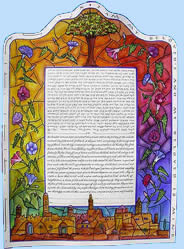 Now comes the reading of the Ketubah (marriage contract) in the original Aramaic text. In marriage, the chatan accepts upon him certain marital responsibilities that are detailed in the Ketubah. His principal obligations are to provide food, dwelling, clothing and sexual satisfaction for his wife, and to be attentive to her emotional needs. The protection of the rights of a Jewish wife is so important that the marriage may not be solemnized until the contract has been completed. Now comes the reading of the Ketubah (marriage contract) in the original Aramaic text. In marriage, the chatan accepts upon him certain marital responsibilities that are detailed in the Ketubah. His principal obligations are to provide food, dwelling, clothing and sexual satisfaction for his wife, and to be attentive to her emotional needs. The protection of the rights of a Jewish wife is so important that the marriage may not be solemnized until the contract has been completed.
The document is signed by two witnesses, and has the standing of a legally binding agreement. The Ketubah is the property of the kallah and she must have access to it throughout their marriage. It is often written amidst beautiful artwork, to be framed and displayed in the home.
The reading of the Ketubah acts as a break between the first part of the ceremony -- Kiddushin (betrothal), and the latter part -- Nissuin (marriage).
THE SEVEN BLESSINGS
The Seven Blessings (Sheva Brachot) are now recited over the second cup of wine. The rabbi recites these blessings.
At the conclusion of the seven blessings, the chatan and kallah again drink some of the wine.
BREAKING THE GLASS
A glass is now placed on the floor, and the chatan shatters it with his foot. This act serves as an expression of sadness at the destruction of the Temple in Jerusalem, and identifies the couple with the spiritual and national destiny of the Jewish people. A Jew, even at the moment of greatest rejoicing, is always mindful of the Psalmist's injunction to set Jerusalem above my highest joy.
Others explain that this is the last time the groom gets to put his foot down.
This marks the conclusion of the ceremony. With shouts of Mazel Tov, the chatan and kallah are then given an enthusiastic reception from the guests as they leave the chupah together and head toward the Yichud room, their temporary private chamber.
YICHUD
The couple are escorted to a private room and left alone for the first time. These moments of seclusion signify the newly acquired right of the chatan and kallah to live together as husband and wife. This is where they consummate the marriage.
THE FESTIVE MEAL (SEUDAH)
It is a mitzvah for guests to bring simchah (joy) to the chatan and the kallah on their wedding day. There is much music and dancing as the guests celebrate with the new couple. To further bring joy to the occasion, some guests show off their skills at juggling and acrobatics.
|